Carne asada is grilled beef in its purest, most elemental form. The name translates simply as "grilled meat," and in the streets of Tijuana, Sonora, and throughout Northern Mexico, you will find it everywhere — on open-air grills, in tiny taquerias, at family gatherings where someone is always standing over a fire with tongs. What makes it transcendent is not complexity but commitment: a good cut, a well-built citrus marinade, and a grill so hot that the exterior chars and caramelizes in the time it takes you to flip it.
The secret that most home cooks miss is the heat. Carne asada demands screaming-hot, face-searing heat — not medium, not medium-high, but the highest your grill or pan can produce. The citrus marinade has already done its work (tenderizing, flavoring, adding moisture), so the job of the grill is purely to create that charred, slightly smoky crust in the minimum time possible, before the thin steak overcooks.
Ingredients
Choosing the cut
Skirt steak is traditional and ideal for carne asada. It is a long, flat, intensely flavored muscle with a loose, open grain that absorbs marinade deeply and cooks in minutes. Flap steak (also called bavette or sirloin tip) is a worthy alternative with similar grain structure and equally bold flavor. Flank steak works but is denser and less forgiving — it can turn chewy if cooked even slightly past medium-rare.
Whatever cut you choose, look for one with good fat striations running through the muscle. Bright red color, good marbling, and fresh smell. Skirt steak is often sold in long pieces — cut it into manageable lengths (around 25cm) before marinating.
The marinade
The marinade is where the flavor is built. Lime and orange juice provide brightness and begin a gentle tenderizing action through their acidity — but this is also why timing matters. Marinate for a minimum of 2 hours to allow flavor penetration, but no longer than 8 hours. Beyond that, the citric acid begins to denature the surface proteins and the texture turns slightly mushy, almost as if the exterior is pre-cooked.
Soy sauce is the non-traditional addition that deserves its place here. It contributes umami depth and, crucially, promotes better browning through its sugars and amino acids (the Maillard reaction happens faster with soy in the mix). The cumin and oregano are the backbone aromatics of the dish; do not skip either.
Cook over maximum heat
Remove the steak from the marinade and pat it completely dry with paper towels. A wet surface steams instead of sears — this is critical. Heat your grill or cast iron to the highest possible temperature. It should be smoking before the steak goes on. Cook 3 to 4 minutes per side for medium-rare. Skirt steak is thin; it moves fast. Check early with a thermometer and target 52°C internal temperature. The carryover heat during resting will bring it to a perfect 55°C.
Rest and slice — the most important step
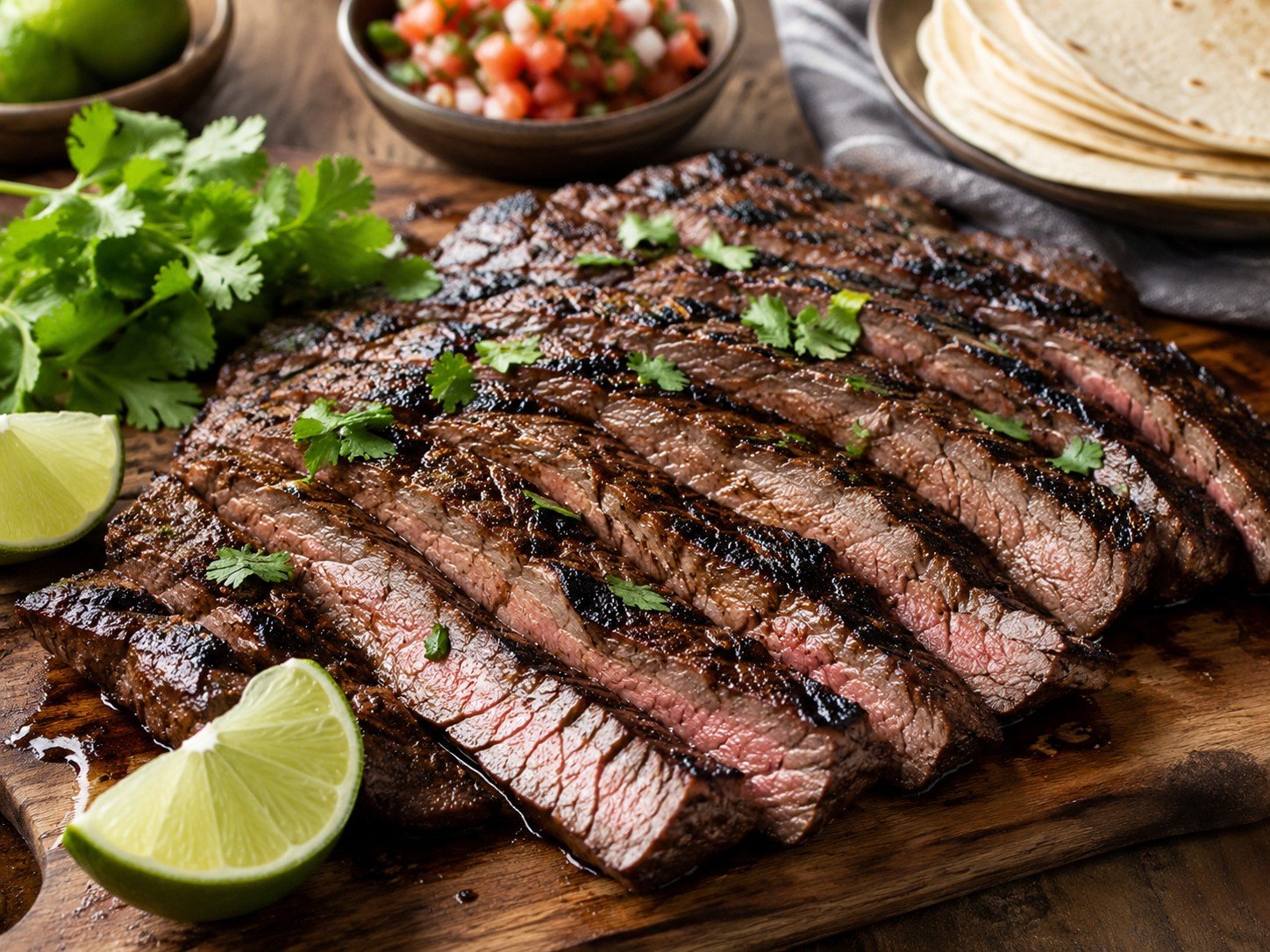
Rest the steak for 5 minutes before slicing. Do not skip this. Then identify the grain direction — skirt steak has very visible, parallel muscle fibers running along its length. You must slice across these fibers, at a slight 45-degree angle, into thin pieces. If you slice with the grain, you will be chewing long, tough muscle fibers. Against the grain, you cross those fibers into short sections that are tender and easy to eat. This single technique is the difference between tough and tender carne asada.
Serving
Carne asada is best served immediately, while hot, in warm corn tortillas with diced white onion, fresh cilantro, avocado, and salsa. A squeeze of fresh lime over everything just before eating is non-negotiable. For a plated version, serve sliced over rice with black beans and a pile of pickled jalapeños. Leftover carne asada makes excellent next-day burritos, breakfast hash with eggs, or steak and cheese quesadillas.